Explore Savvly's Longevity Benefit

Savvly is reinventing retirement for a population that is living longer, enjoying more active later years, and requiring significantly more capital to sustain both.

As a complement to existing retirement plans, the Longevity Benefit is a first-of-its-kind SEC-registered product that transforms longevity from a financial risk into a reward.

Estimate your employee's potential outcomes

FAQs

Is the Longevity Benefit insurance?
No, the Longevity Benefit isn’t insurance. It’s built on a low-cost S&P 500 index fund and distributes more proceeds to investors who live longer.
How long does implementation take?
Same day implementation for most employers. Our team handles setup, integration with your payroll provider, and employee communication.
Is this benefit employer or employee funded?
The Longevity Benefit can be either employer or employee funded. We suggest that employers contribute to their employee's Longevity Benefits, and employees can always contribute additional funds. The structure is flexible and allows for matching if desired.
Are there any medical requirements?
No medical exam or health history is required. The Longevity Benefit is based purely on financial contributions and doesn’t take an employee's health into account. However, Savvly is designed for those who expect a long retirement.
How is the Longevity Benefit taxed?
It can be set up either as ROTH taxation or as non-qualified compensation. Consult a tax advisor. Savvly does not provide tax advice.
What can the "four payouts" look like?
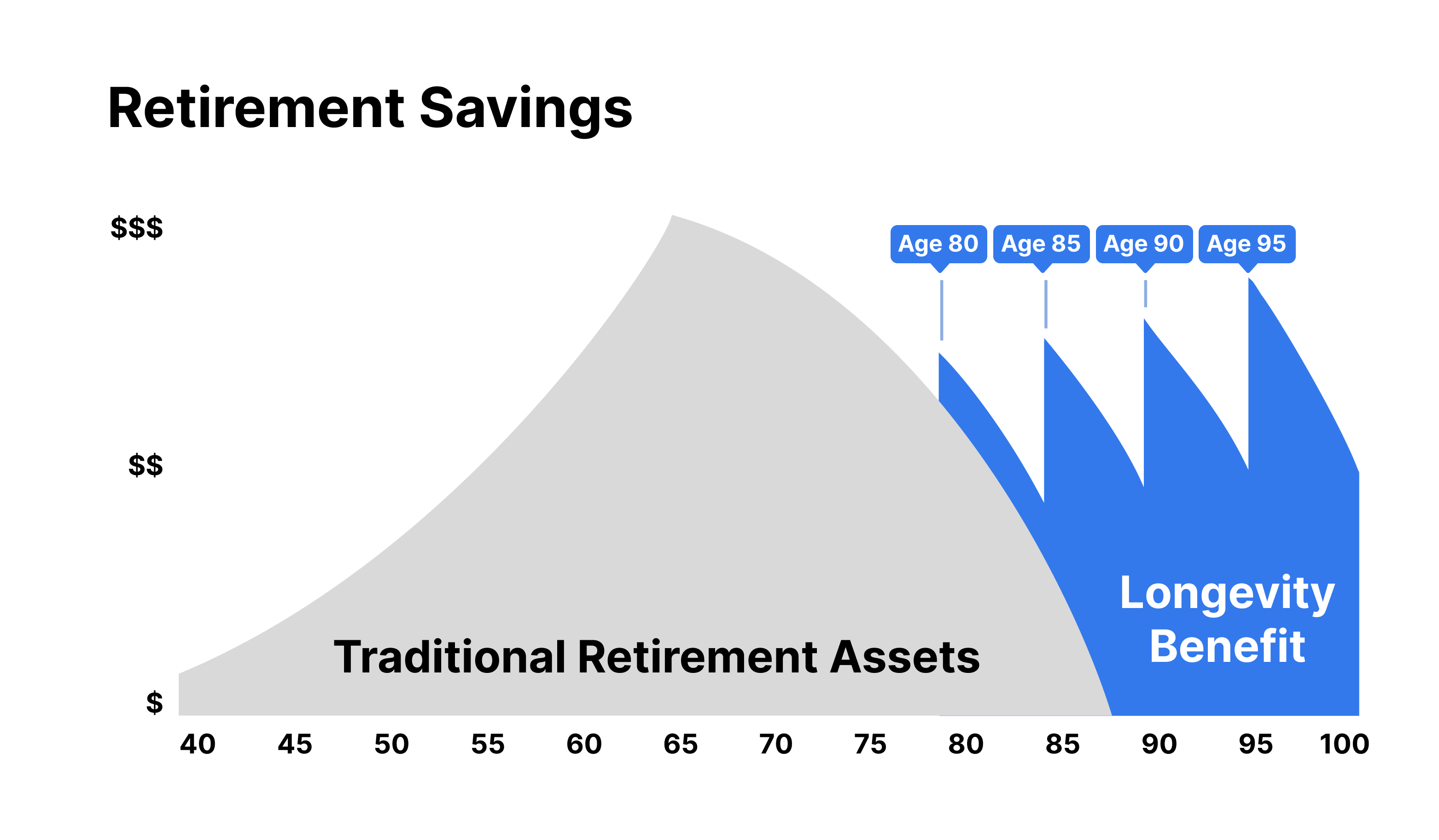
The Savvly Longevity Benefit is designed so that each investor, if remaining invested, will recieve four milestone payouts at ages 80, 85, 90, and 95. The amount of each of the payouts is estimated, and it's subject to fund performance, investor activity, and market structure. Reference the fund prospectus for more information.
How is the Longevity Benefit different from an annuity?
Savvly's Longevity Benefit is a capital markets fund, not an insurance contract. Contributions are invested in low-cost S&P 500 ETFs held by third-party custodians. When employees exit, their uncollected growth flows directly to remaining investors. There is no insurance company involved and no complex contract terms.
What happens if an employee switches jobs?
The account belongs to the employee. There is no trust involved. If employees change jobs, it goes with them and continues to grow toward their milestone payouts.
What if an employee passes away before collecting their benefits?
Their family or estate receives all or a portion of their deposits back under the Exit Rule. The early withdrawal value is calculated as 75% of the contribution plus an additional 1% for each year held, capped at 100%. Lower early withdrawal amounts mean possibility of higher longevity protection. See fund prospectus for full details.